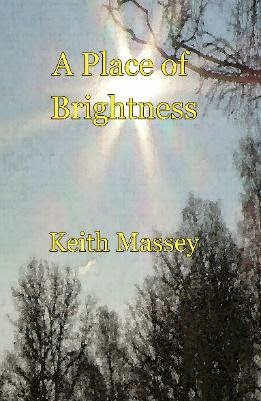
I put the word "Christian" in quotes to indicate that I am an espionage novelist who happens also to be a Christian. I don't write my novels to proselytize, but at the same time, some of my characters (though not all) share my world view. As a former spy myself, my espionage novels include authenticity of trade craft, but my spy still tries to go to Church on Sunday, as do I.
Showing posts with label a place of brightness. Show all posts
Tuesday, August 30, 2016
Living with—and Writing through—Regret
A Lifetime of Regrets
While visiting my wife's native Romania one summer, I learned that there had been an anti-communist insurgency there back in the 50's. It was eventually crushed in the early 60's.
I began to imagine a family in Transylvania who fought as anti-communist freedom fighters. I imagined that this family's motivation was largely in defense of the Church that the communists were suppressing.
And in particular I found myself dwelling on the regret and disappointment such people must have experienced when their hard-fought effort came to nothing and they were forced to either flee the country or form a life within the communist system.
And so it was that I began writing the novel A Place of Brightness. It shares the saga of such a family of freedom fighters as they experience the end of the rebellion. It continues to a second generation who must unexpectedly take up the torch and face their family's enemies.
In the very first chapter, I describe how a brother and sister team have resolved that their current operation against the communists would have to be their last. They dare to share with each other dreams of the life they will fade into as they now set their rebellion aside.
But things don't go according to plan on that final mission and what follows are lives deeply and tragically wounded by the regret of what never came to pass.
What Brought Me There
Like you, so many things I had once perhaps imagined my life could include and would mean—just didn't happen as I planned.
Lofty dreams of my youth never materialized.
More reasonable dreams of my young adulthood came true in only mixed measure.
Safer plans in my full adulthood evolved into a comfortable life.
And then my world was turned upside down.
You see, I had a PhD in Biblical Hebrew, with a minor in Arabic. That was a safe plan, since it had followed accepting a scholarship. And I loved the study.
But then, on the evening of Tuesday, September 11th, 2001, I saw appeals on the news for people with expertise in Arabic to submit resumes to the intelligence agencies in response to what had happened.
Quick version. Submitted. Accepted. Suddenly I was an Intelligence Officer at the National Security Agency.
What followed was a whirlwind of adventure and emotion. I would serve in Iraq, for which I was awarded the Global War on Terrorism Civilian Service Medal. I would serve in the Office of Counter Terrorism, helping to foil plots against our nation.
I served at the NSA for four years, longer than the US was in WWII. I came to a point where I was ready to move on—and to a quieter life.
As I resigned my position and became a mild-mannered Latin teacher, I needed a way to process all that I had been through.
A Place of Brightness
I wrote my novel for many reasons. As a boy growing up in Wisconsin, I never imagined I would ever stand in a war zone. Some of the more intense battle scenes of the novel allowed me to process the chaos and insanity of it all.
As I look back on my life, I certainly have some regrets. The experience of going to war and working in the Top Secret world of espionage had a toll on me. A part of me wonders, with understandable regret, what my life would be had I not gone down that path.
At the same time, I would not change anything were I given the chance to do it all over. I am what I am today because of the choices I made.
My novel is primarily a story of family and faith. I come from a close family and the bonds the characters in A Place of Brightness share are real. They are practicing Christians because I would dishonor myself to write them any other way.
But a most important matter explored in the novel is the tremendous burden the brother and sister will experience as the dreams of a future life which they hoped for on that final night—are crushed.
What do you do when everything you ever dreamed your life would mean is suddenly gone?
As you will learn in the novel, the answer is—you pick up a new dream and you move forward—in faith.
Sunday, August 17, 2014
In Defense of the Cathedral for the Salvation of the Romanian People (Catedrala Mântuirii Neamului Românesc)
The current Romanian national cathedral is a structure which was built in the 17th century. Since that time, Romania has grown to be the second largest Orthodox national church, after Russia. I've been in the national cathedral. The Lutheran church where I grew up in Madison, Wisconsin is bigger, and actually more beautiful, especially in terms of internal lighting.
And my point is simple. The Romanian Orthodox Church needs, nay, deserves a new cathedral which matches her size and significance within world Orthodoxy.
I am a convert to the Eastern Orthodox Church of ten years. After I became Orthodox I met the Romanian-American woman I then married. We are school teachers and have spent most of our summer vacation in Romania in that time. I have learned to speak competent Romanian. I know and love Romania.
The Romanian Orthodox Church is currently building a new national cathedral. It will be called the "Cathedral for the Salvation of the Romanian People" (Catedrala Mântuirii Neamului Românesc).
It is everything they deserve in terms of the grandeur of their Church. But, not surprisingly, there has been criticism of the project from many quarters. In this post, I will address the issues and explain why the new cathedral is so worthy of support.
The Cathedral for the Salvation of the Romanian People (Catedrala Mântuirii Neamului Românesc)
One of the common criticisms you will hear is that, the Romanians are building a huge new cathedral while people are in need. Why don't we instead spend all that money on schools, hospitals, and other support for the poor?
This immediately reminds me a quote from Gilbert Chesterton:
"Those thinkers who cannot believe in any gods often assert that the love of humanity would be in itself sufficient for them; and so, perhaps, it would, if they had it."
The point is, only the Church is criticized for spending any money not on the poor. Where are the soup kitchens that the Atheists run? (The new cathedral, by the way, will run a soup kitchen for a thousand.) Some businessman builds a new stadium for a soccer team and no one protests it telling him he should instead have built a hospital. For that matter, count up the free clinics built and operated by the Orthodox Church in Romania. They were under no legal obligation to build so much as one. And yet they built many. And the moment they decide to build a new cathedral, they are attacked for not building more hospitals?
If you don't like the new cathedral, put your so-called ideals where they really belong. Don't blame the Church for not building one more hospital. Build one yourself. You'll find it enormously complicated. And if you actually do try to build one, you'll emerge with respect for the Church for her efforts over the centuries.
I suspect, however, that the critics won't really try. Building hospitals is hard. Criticizing others for not building hospitals is easy.
Another criticism I have heard in Romania regards the location of the new cathedral. It is right next to the Palace of the Parliament, a monstrosity built by Ceausescu for an estimated 5.7 billion US dollars. And so, the criticism is that the new cathedral looks, next to it, like just one more building that drew enormous expense off the people.
Let's address the issue of location. If you've ever been in Bucharest, you'll notice that the Ikea store that was built after Communism is not in the downtown. It's on the way to the airport, in an area that was completely undeveloped when I first started coming to Romania.
Why is the Ikea not downtown? For the simple fact that there is absolutely no place downtown where you could possibly have fit it in!
And, guess what? There is nowhere downtown where you also could have put a cathedral worthy of the Romanian Church.
Imagine if they had decided to build the cathedral in that undeveloped area on the way to the airport. Then there would have been a public outcry saying, "They're building the new cathedral too far away from the city!"
Yeah, that's right. No matter what they did someone was going to criticize it.
Now, it just so happens that the only place anywhere remotely close to the city center with undeveloped land capable of housing a project as significant as the cathedral the Romanian Orthodox Church deserves is...next to the Palace of the Parliament. Building it there is not just practical. It's a necessity.
As for the cathedral being built at the expense of the people, the government donated land that was not previously being used for the project. They did so knowing that this project would eventually generate money for the nation in the following way.
Romania is growing yearly in tourism potential. When completed, the new cathedral will be a major attraction for visitors to Bucharest. Admission to the cathedral will be free. But if the Church sells candles, icons, and other items, the cathedral will end up paying for itself in the long run.
And there's nothing wrong with that.
So, in the final analysis, I could not more enthusiastically support the current construction of the Cathedral for the Salvation of the Romanian People (Catedrala Mântuirii Neamului Românesc). Until the day of its consecration (estimated sometime in 2016), I will be donating all the proceeds from my novel A Place of Brightness to that building project.
This novel is set almost entirely in Romania and follows the story of a faithful Orthodox family struggling against Communism in the 1960's and then pulled into international intrigue in the early 2000's as they must once again fight against an atheistic tyranny they thought was long defeated.
Please note, do not buy this novel if you do not want to support the new cathedral project.
If you would like to donate directly to the new cathedral, please visit their website.
And my point is simple. The Romanian Orthodox Church needs, nay, deserves a new cathedral which matches her size and significance within world Orthodoxy.
I am a convert to the Eastern Orthodox Church of ten years. After I became Orthodox I met the Romanian-American woman I then married. We are school teachers and have spent most of our summer vacation in Romania in that time. I have learned to speak competent Romanian. I know and love Romania.
![]() |
| Artist Depiction of the Cathedral under Construction |
It is everything they deserve in terms of the grandeur of their Church. But, not surprisingly, there has been criticism of the project from many quarters. In this post, I will address the issues and explain why the new cathedral is so worthy of support.
The Cathedral for the Salvation of the Romanian People (Catedrala Mântuirii Neamului Românesc)
One of the common criticisms you will hear is that, the Romanians are building a huge new cathedral while people are in need. Why don't we instead spend all that money on schools, hospitals, and other support for the poor?
This immediately reminds me a quote from Gilbert Chesterton:
"Those thinkers who cannot believe in any gods often assert that the love of humanity would be in itself sufficient for them; and so, perhaps, it would, if they had it."
The point is, only the Church is criticized for spending any money not on the poor. Where are the soup kitchens that the Atheists run? (The new cathedral, by the way, will run a soup kitchen for a thousand.) Some businessman builds a new stadium for a soccer team and no one protests it telling him he should instead have built a hospital. For that matter, count up the free clinics built and operated by the Orthodox Church in Romania. They were under no legal obligation to build so much as one. And yet they built many. And the moment they decide to build a new cathedral, they are attacked for not building more hospitals?
If you don't like the new cathedral, put your so-called ideals where they really belong. Don't blame the Church for not building one more hospital. Build one yourself. You'll find it enormously complicated. And if you actually do try to build one, you'll emerge with respect for the Church for her efforts over the centuries.
I suspect, however, that the critics won't really try. Building hospitals is hard. Criticizing others for not building hospitals is easy.
Another criticism I have heard in Romania regards the location of the new cathedral. It is right next to the Palace of the Parliament, a monstrosity built by Ceausescu for an estimated 5.7 billion US dollars. And so, the criticism is that the new cathedral looks, next to it, like just one more building that drew enormous expense off the people.
Let's address the issue of location. If you've ever been in Bucharest, you'll notice that the Ikea store that was built after Communism is not in the downtown. It's on the way to the airport, in an area that was completely undeveloped when I first started coming to Romania.
Why is the Ikea not downtown? For the simple fact that there is absolutely no place downtown where you could possibly have fit it in!
And, guess what? There is nowhere downtown where you also could have put a cathedral worthy of the Romanian Church.
Imagine if they had decided to build the cathedral in that undeveloped area on the way to the airport. Then there would have been a public outcry saying, "They're building the new cathedral too far away from the city!"
Yeah, that's right. No matter what they did someone was going to criticize it.
Now, it just so happens that the only place anywhere remotely close to the city center with undeveloped land capable of housing a project as significant as the cathedral the Romanian Orthodox Church deserves is...next to the Palace of the Parliament. Building it there is not just practical. It's a necessity.
As for the cathedral being built at the expense of the people, the government donated land that was not previously being used for the project. They did so knowing that this project would eventually generate money for the nation in the following way.
Romania is growing yearly in tourism potential. When completed, the new cathedral will be a major attraction for visitors to Bucharest. Admission to the cathedral will be free. But if the Church sells candles, icons, and other items, the cathedral will end up paying for itself in the long run.
And there's nothing wrong with that.
So, in the final analysis, I could not more enthusiastically support the current construction of the Cathedral for the Salvation of the Romanian People (Catedrala Mântuirii Neamului Românesc). Until the day of its consecration (estimated sometime in 2016), I will be donating all the proceeds from my novel A Place of Brightness to that building project.
This novel is set almost entirely in Romania and follows the story of a faithful Orthodox family struggling against Communism in the 1960's and then pulled into international intrigue in the early 2000's as they must once again fight against an atheistic tyranny they thought was long defeated.
Please note, do not buy this novel if you do not want to support the new cathedral project.
If you would like to donate directly to the new cathedral, please visit their website.
Thursday, July 24, 2014
Let's Visit Mănăstirea Plumbuita - the "Lead-Sealed Monastery" in Bucharest
![]() |
| Our Wedding at Plumbuita |
Mănăstirea Plumbuita means "The Lead-Sealed Monastery." It's a place near and dear to my heart, because it's where my wife and I were married back in 2005. And, in my mind, it was the setting of key scenes of my novel A Place of Brightness.
Mănăstirea Plumbuita is situated in the north-east quarter of Bucharest, Romania, on a peninsula within Lacul Plumbuita (Plumbuita Lake). It's

Aerial view of the monastery
a monastery that has been in continuous operation since the year 1560. It's called "Lead-sealed" (Plumbuita) because in the very early days, the church on the site was roofed with lead tiles (since then demolished and rebuilt). No current building on the premises has lead tiles. But the name stuck. For over 400 years.

In my novel, several key episodes take place at a monastery called Mănăstirea Sfânta Treime. This means "Holy Trinity Monastery." But Mănăstirea Plumbuita was the place these scenes actually happened in my mind's eye.
To the left you see the current church, built in the 18th century, over the spot of an earlier edifice. Early in my novel, on old monk is described as praying there.
The church is a place with dark, hand-painted walls, likely darker from hundreds of years of incense and candle residue. To the right is what the inside looks like.
In my novel, I describe how the monastery is surrounded by twenty foot brick walls, with massive wooden doors for entrance. To the left is what I was actually describing, the gate below the bell tower of Plumbuita, all of which was built in 1802.
The monastery operates a free clinic and pharmacy for low-income families. Please visit their main website (it's in Romanian but Google translate will do a good enough job) to learn more and donate to their worthy ministry.
Subscribe to:
Posts (Atom)